
Breast augmentation is a surgical procedure designed to increase breast volume or change breast shape and proportions. Patients may consider breast augmentation for naturally smaller breasts, changes in breast volume after pregnancy or weight loss, or differences in breast size. The appropriate approach depends on each patient’s anatomy, preferences and medical suitability.
Dr. Ata-ul-Haq (MBBS, FCPS) is a plastic and reconstructive surgeon with over 15 years of experience. He serves as Associate Professor of Plastic Surgery at Allama Iqbal Medical College, Lahore. He offers breast augmentation using breast implants and fat transfer, allowing suitable patients to discuss different approaches during consultation.
Breast implants add volume using an implant, while fat transfer uses fat harvested from another area of the patient’s body. Each technique has different considerations, limitations and risks. A consultation helps determine which option, if either, is appropriate for the patient’s goals.
Considering breast augmentation in Lahore? Arrange a consultation with Dr. Ata-ul-Haq to discuss your options, understand the differences between implants and fat transfer, and learn about recovery and potential risks.

Breast augmentation can be performed using implants or the patient’s own fat. Both approaches can increase breast volume, but they differ in how the procedure is performed, the degree of volume change that may be achievable and their associated risks.
Breast implant surgery uses medical implants placed within the breast to increase volume and change breast shape. Implant selection and placement depend on the patient’s anatomy, desired outcome and clinical assessment.
During consultation, the surgeon discusses the available implant options, incision placement, implant position, expected changes and possible complications. Patients should also understand that breast implants are not lifetime devices and may require monitoring or additional surgery in the future.
Breast implant surgery may be considered by women seeking a more substantial or predictable increase in breast volume, although the achievable result varies between individuals.
Breast augmentation with fat transfer uses the patient’s own fat, which is collected from areas such as the abdomen, waist or thighs through liposuction. The harvested fat is processed and injected into the breasts according to the treatment plan.
This technique may appeal to patients who prefer not to use implants and who have sufficient donor fat. However, the amount of volume increase is limited by the available fat, tissue characteristics and the amount that can be transferred safely.
Some transferred fat is naturally reabsorbed by the body. Consequently, the final volume may be less than the initial postoperative appearance, and more than one session may sometimes be considered.
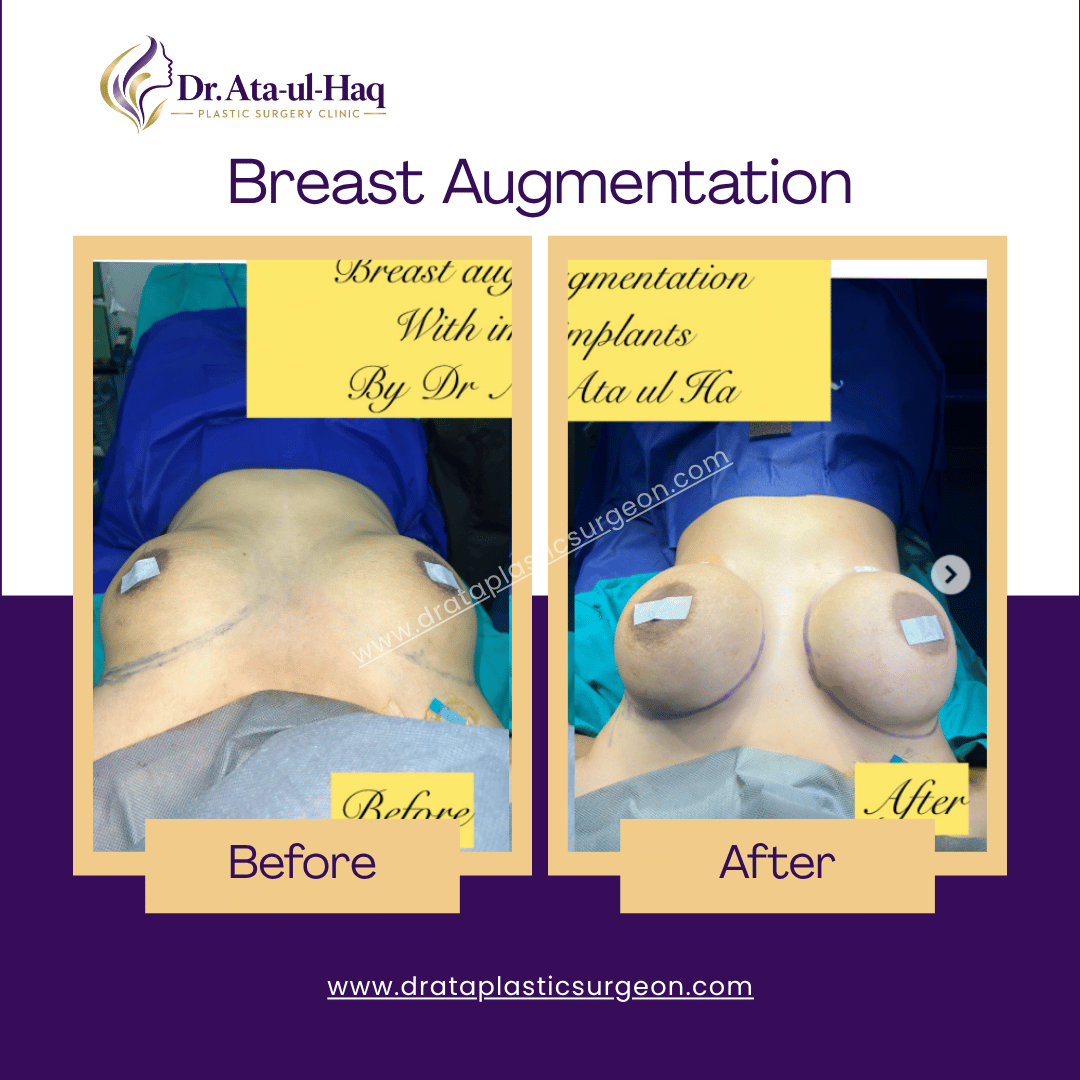
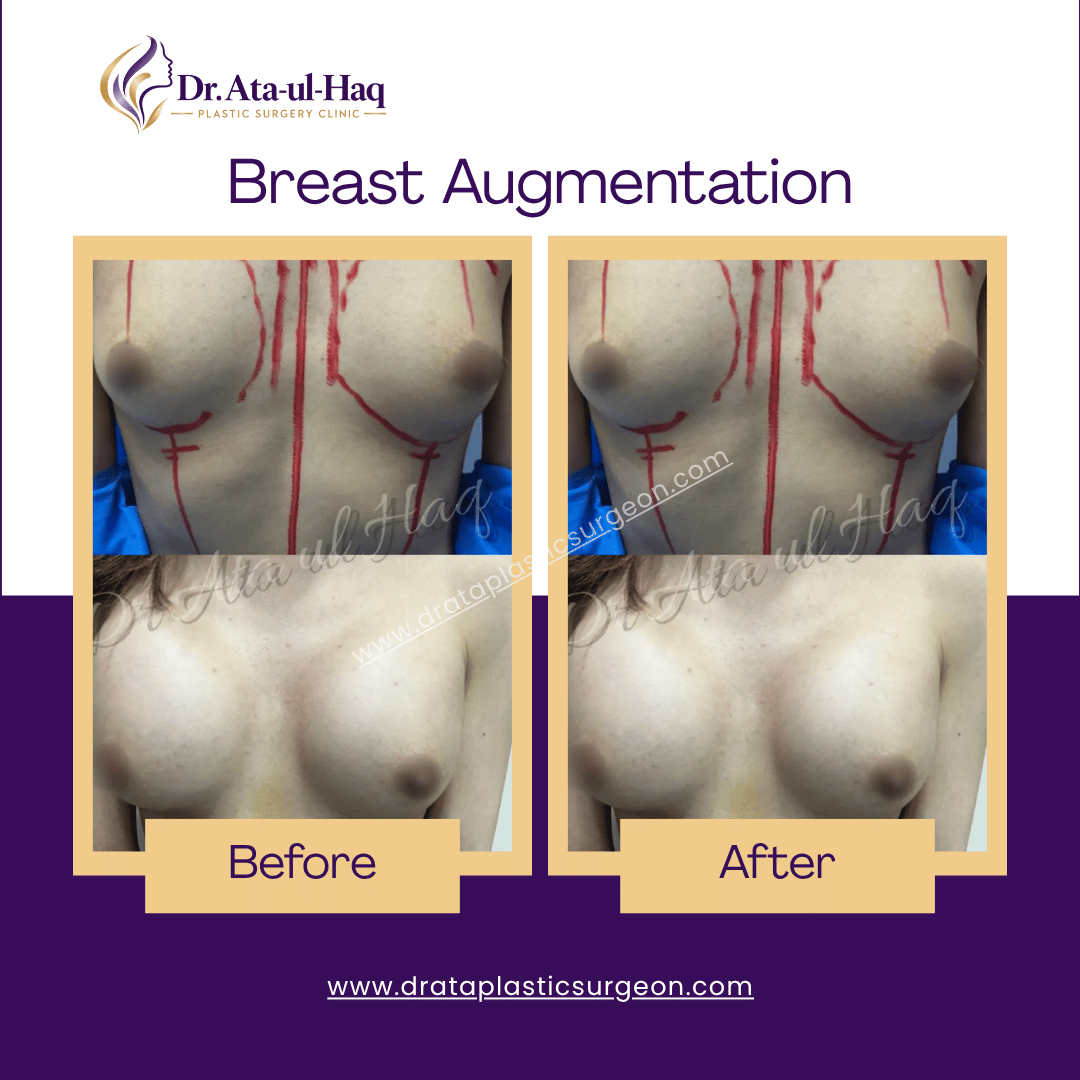
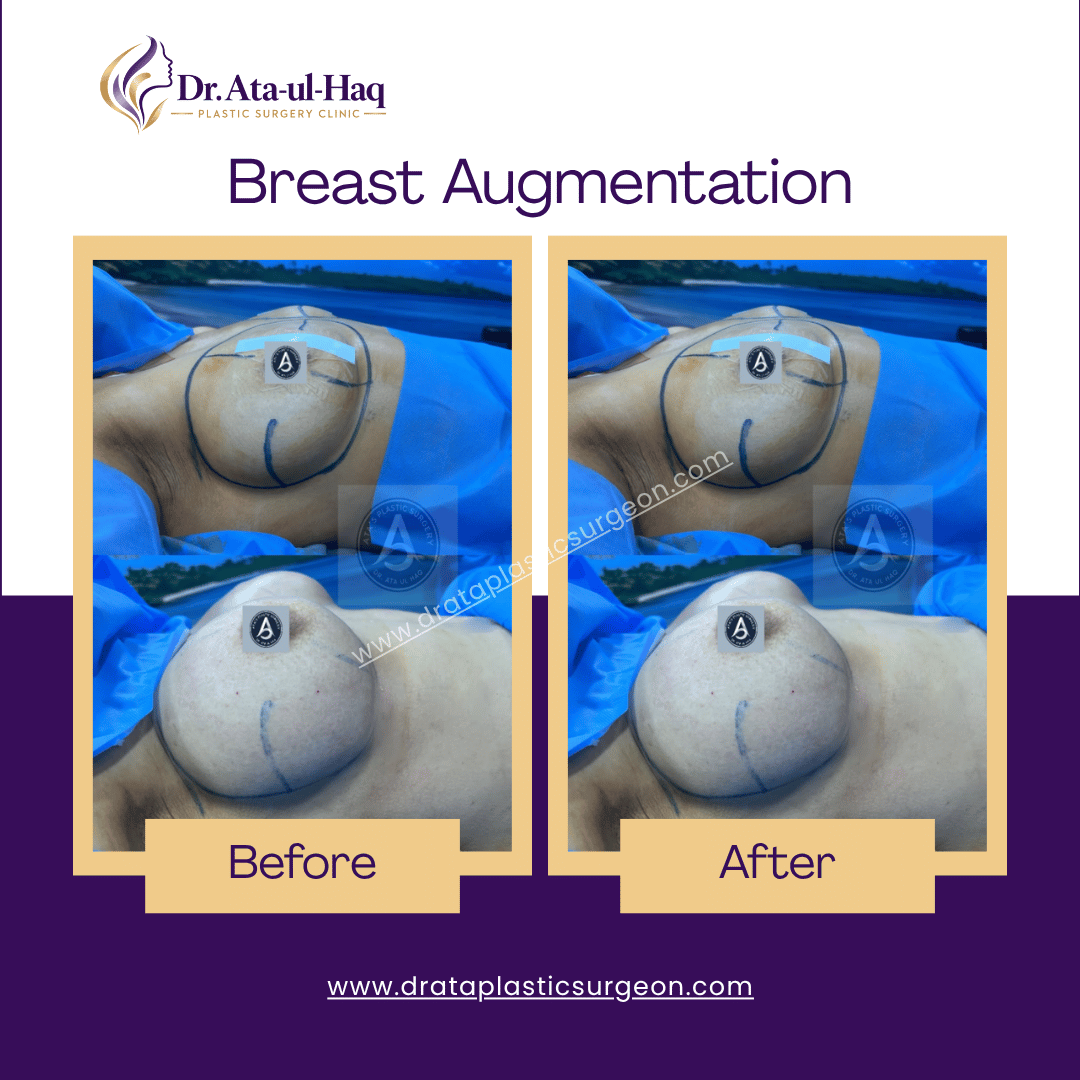
The procedure depends on whether breast implants or fat transfer is selected.
Before surgery, the surgeon reviews medical history, examines the breasts and discusses the patient’s goals. The consultation may include a discussion of implant selection or donor-fat availability, the surgical approach, anaesthesia, potential risks and expected recovery.
Any recommended investigations and preoperative instructions should be completed before the procedure.
Breast implant surgery is performed under an appropriate anaesthetic plan. An incision is made at a selected location, and the implant is positioned according to the agreed surgical approach. The incision is then closed and postoperative care instructions are provided.
The incision location and implant position depend on individual anatomy, the selected implant and the surgeon’s assessment.
Fat transfer generally involves three stages:
Fat harvesting: Fat is collected from a suitable donor area using liposuction.
Fat processing: The harvested fat is prepared for transfer.
Fat injection: The prepared fat is placed into selected areas of the breasts.
Not all transferred fat survives, so the final result depends partly on how much fat remains after healing.
The breast augmentation procedure is designed to enhance breast shape and volume. This procedure can be done using breast implants or fat transfer surgery to increase the size of your breasts. It can enhance body image, and balance, but also, may be useful in rejuvenating breasts that have lost volume and shape after having children or losing a considerable amount of weight.
Breast augmentation can be performed using many methods. One method is a patient’s own fat taken from the abdomen or buttocks to augment the breast. This process is known as fat grafting or fat transfer. The second type of treatment is implants and is used to enhance the size and shape of breasts.
A breast implant is a reconstructive plastic surgery procedure used to change the size, shape, and contour of a person's breast. Breast implants can be placed to restore a natural looking breast.
There are two types of implants for breast augmentation surgery, saline and silicone. Saline is essentially intravenous fluid composed of a saltwater solution. These implants require smaller incisions and are typically less expensive. However, downsides to saline implants include: less authentic feel when compared to silicone, and a greater likelihood of rippling under the skin. Silicone breast implants are filled with silicone gel. They feel the most natural and are less likely to create rippling under the skin. Gummy bear implants are a new type of silicone implant, which have a teardrop shape. These implants help shape an augmented breast.
Dr. Atta is able to place the implant either under or over the muscle. Placing the implant under the muscle is termed a subpectoral augmentation. Placing the implant on top of the muscle is known as a subglandular augmentation. The majority of women benefit from a subpectoral augmentation; however, Dr. Atta will make the decision with you after reviewing the advantages and risks associated with both subglandular and subpectoral augmentations. Dr. Atta-ul-Haq is one of the top surgeon that does breast implants in Lahore for over 15 years.
Fat transfer, also known as autologous fat transplantation and microlipoinjection, entails removing fat from one area of the body, and transferring it to another. It can be an alternative to breast implants. For example, you may choose to have a fat transfer to your breasts rather than traditional breast augmentation. Fat transfer has the added benefit of not only enhancing one area of your body, but removing unwanted fat from another part of the body.
You can receive a fat transfer to nearly any spot on your body where you want more volume. Popular areas include the breasts, buttocks, cheeks, lips, hips, and hands.
No. Your body will consider this to be “foreign” tissue, and will reject it. This poses a health risk, and at our clinic, your safety is our highest priority. If you don’t have enough fat, we can discuss other options with you.
You’ll see some swelling and possibly bruising in the treated areas, and may also experience some soreness. This will gradually dissipate over a few weeks.
You’ll be able to see the results of your fat transfer in about three to four months. However, this depends on the areas treated as well as your general health.
If you have any further question about fat transfer procedure please talk to Dr. Atta-ul-Haq, he is one of the top surgeons that does fat transfer in Lahore for over 15 years.
On average, the procedure will take less than 2 hours to perform. Some more complex cases may take more time. If a breast lift is also performed at the same time, then the surgery can take up to 4 hours.
A common question that we receive is whether the scars from a breast augmentation are noticeable. The answer is: It depends. The location of your implants, the size of the implants, and your own skin all factor how noticeable your implant scars are.
In general, patients will stay with us for a few hours before going home. Immediately after your surgery, you will be taken to our recovery area where our staff will take care for you as you recover. In general, most patients will remain in the recovery area for a few hours before being allowed to go home.
Recovery varies according to the technique used, the extent of surgery and individual healing.
After breast implant surgery, patients may experience soreness, swelling, bruising and temporary changes in sensation. Following fat transfer, recovery also involves the donor areas from which fat was harvested.
Your surgeon may provide instructions about:
Wound care and hygiene
Prescribed medications
Support garments or bras, where appropriate
Sleeping position and physical activity
Returning to work and exercise
Follow-up appointments
Strenuous activity may need to be restricted temporarily. Patients should follow their surgeon's instructions rather than relying on a fixed recovery timeline.
The breasts may change in appearance as swelling settles and healing progresses. Final results vary, and fat transfer volume may change as some transferred fat is reabsorbed.
Potential complications include infection, bleeding, scarring, changes in nipple or breast sensation, implant malposition, implant rupture and capsular contracture, in which scar tissue around the implant becomes firm or tight. Further surgery may be needed in some cases.
Breast implants are not lifetime devices. Patients should discuss appropriate follow-up, implant monitoring and the possibility of future procedures with their surgeon.
The cost of breast augmentation in Lahore varies depending on the technique selected and the patient's treatment requirements.
Factors that may affect the cost include:
Whether implants or fat transfer are used
The type and cost of implants, where applicable
The extent of surgery and anaesthesia
For fat transfer, the donor areas and harvesting requirements
Surgical facility fees
Follow-up care and other applicable expenses
Breast implant surgery and fat transfer involve different procedures and cost considerations, so a single price may not apply to both.
An individualized estimate can be discussed after consultation and assessment.
Breast implants use a medical implant to increase volume, while fat transfer uses fat harvested from another area of the patient's body. Implants may allow a more substantial increase in volume, while fat transfer usually offers a more modest change and depends on fat availability and retention.
Breast implants are not lifetime devices. Some remain in place for many years, but complications, changes in preference or other circumstances may lead to additional surgery. Patients should discuss implant monitoring and long-term follow-up with their surgeon.
You can contact Dr. Ata-ul-Haq's clinic in Johar Town, Lahore, to ask about consultation availability and discuss breast augmentation options.
Dr. Ata-ul-Haq (MBBS, FCPS) is a plastic and reconstructive surgeon with over 15 years of experience in the field. He serves as Associate Professor of Plastic Surgery at Allama Iqbal Medical College, Lahore.
He is a Life Member of the Pakistan Association of Plastic Surgeons (PAPS), a Founder Member of the Association for Aesthetic Surgery Pakistan (AASP), and a member of the American Society of Plastic Surgeons. His academic contributions include 22 national and international publications and co-authorship of a chapter in the Oxford Textbook of Plastic and Reconstructive Surgery.
For patients considering breast augmentation in Lahore, consultation with Dr. Ata-ul-Haq provides an opportunity to discuss their goals, compare breast implants with fat transfer, and understand the suitability, risks, limitations and recovery associated with each option.

Dr. Ata-ul-Haq (MBBS, FCPS) is an Associate Professor of Plastic Surgery at Jinnah Hospital/Allama Iqbal Medical College, Lahore, Pakistan. He is certified and member of Pakistan Association of Plastic Surgeons and Pakistan Medical and Dental Council.