Facelift Surgery in Lahore

Facial Rejuvenation by Dr. Ata-ul-Haq

What Is Facelift Surgery?

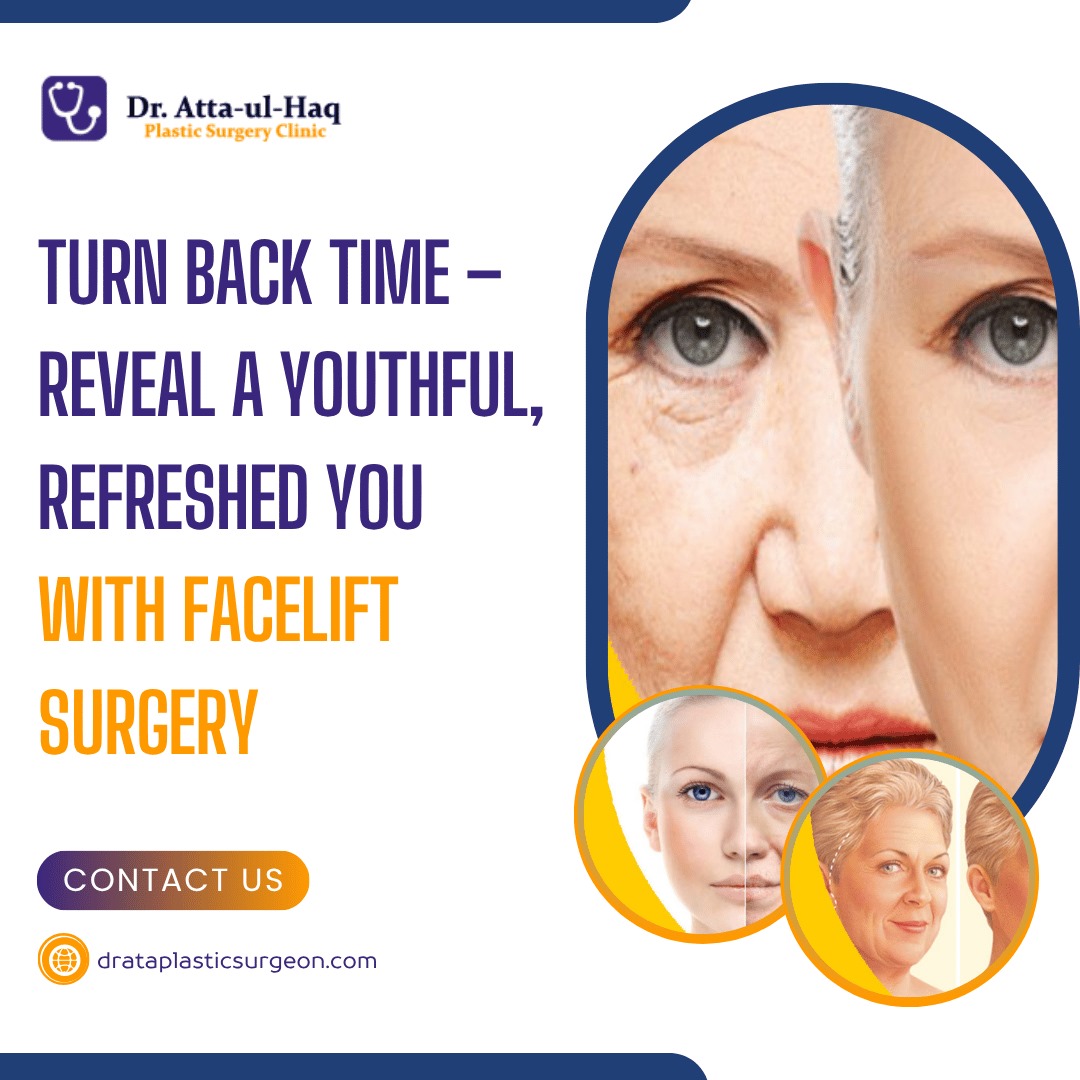
A facelift, medically known as rhytidectomy, is a surgical procedure designed to address selected signs of ageing in the face, particularly around the cheeks, lower face and jawline. Depending on the patient’s anatomy and treatment goals, the procedure may involve repositioning underlying tissues, removing excess skin and improving the contour of the face. Facelift surgery may help address:

Book an Appointment for Facelift Surgery From Lahore best Palstic Surgeon

A facelift does not stop the ageing process and does not address every facial concern. Fine lines, skin texture, pigmentation, forehead ageing and changes around the eyes may require different treatments. The surgical plan is tailored to the patient’s facial anatomy, skin quality, health and expectations.
Dr. Ata-ul-Haq is a plastic surgeon and Associate Professor of Plastic Surgery at Jinnah Hospital and Allama Iqbal Medical College, Lahore. Patients considering facelift surgery can arrange a consultation to discuss their concerns, understand the available options and learn about the expected results, recovery and potential risks.

What Concerns Can a Facelift Address?

Facelift surgery is generally considered by people who want to address visible changes in the lower and middle portions of the face.

Sagging Cheeks

Changes in the supporting tissues of the face can contribute to a heavier or less defined appearance around the cheeks. A facelift may reposition selected tissues to improve facial contours.

Jowls and Jawline Definition

Loose skin and tissue along the lower face can create jowls and soften the jawline. Depending on the patient’s anatomy, a facelift may help improve the transition between the cheeks and jawline.

Deep Facial Folds

Some folds become more prominent as facial tissues descend and volume changes occur. Facelift surgery may soften certain folds, although it cannot remove every line or crease.

Loose Skin Around the Neck

When ageing changes also affect the neck, a facelift may be considered alongside a neck lift. The need for a separate or combined procedure depends on the amount of loose skin, muscle changes and the patient’s goals.

Types of Facelift Surgery

The appropriate surgical approach depends on the areas being treated, the degree of tissue laxity and the patient’s anatomy. Not every patient needs the same type of facelift.

Mini Facelift

A mini facelift generally involves a more limited approach to selected signs of ageing in the lower face. It may be considered for patients with relatively mild changes who are suitable for a less extensive procedure. A mini facelift is not appropriate for everyone, and the term can describe different techniques. The surgeon should explain the specific approach, its limitations and the likely recovery.

Standard or Traditional Facelift

A traditional facelift addresses more extensive changes in the lower face and may include work on the underlying supporting tissues as well as excess skin. The extent of surgery and incision placement depend on the treatment plan.

Facelift With Neck Lift

Some patients have both facial sagging and changes in the neck. A combined facelift and neck lift may be considered when addressing both areas is appropriate. A neck lift focuses on selected concerns such as loose neck skin and changes in the tissues beneath the chin. The surgeon will explain whether combining procedures is suitable and how this affects the risks and recovery. The exact technique should be selected after an individual assessment rather than on the basis of a procedure name alone.

Who May Be Suitable for Facelift Surgery?

Facelift surgery may be considered by adults who have visible sagging of the facial tissues and want to improve their facial contours. Suitability depends on several factors, including:
There is no single ideal age for a facelift. The decision depends on the individual’s anatomy, health and concerns rather than age alone. A facelift is not a substitute for weight loss, and it may not address concerns caused mainly by loss of facial volume or skin texture. A consultation helps determine whether surgery is appropriate and whether other options should be considered.

Before/After

Facelift Surgery Before and After

Before-and-after photographs can help patients understand the types of changes that may be possible after facelift surgery. However, results vary according to facial anatomy, the surgical technique and individual healing. If photographs are available, review genuine patient examples during your consultation. Ask how long after surgery the photographs were taken and whether the patient’s concerns were similar to your own. Photographs should support a realistic discussion and should not be treated as a guarantee of a particular outcome.

FAQs

Frequently Asked Questions About Facelift Surgery

A facelift is a surgical procedure that addresses selected signs of ageing in the face, particularly sagging tissues, jowls and changes in the lower face. It may involve repositioning underlying tissues and removing selected excess skin.
A mini facelift generally addresses more limited changes in the lower face, while a traditional facelift may be suitable for more extensive tissue laxity. The exact techniques vary, and the appropriate approach depends on the patient's anatomy and treatment goals.
A facelift may improve selected areas near the jawline, but significant neck skin laxity or muscle changes may require a neck lift. A surgeon can assess whether one procedure or a combination is appropriate.
The duration depends on the technique, the extent of treatment and whether additional procedures are performed. The surgeon can provide a more accurate estimate after assessing the proposed surgical plan.
Recovery varies between patients. Swelling and bruising often improve over the first few weeks, while tissue healing and scar maturation continue for longer. Your surgeon will advise when you can return to work, exercise and other activities.
Yes. Incisions are required, and scars are part of the healing process. They are commonly placed around the ears and hairline when appropriate. Their appearance depends on incision placement, skin characteristics and individual healing.
Facelift surgery can produce long-lasting changes, but it does not stop natural ageing. The face and neck continue to change over time, and results differ between individuals.
No surgery is risk-free. Potential complications include bleeding, infection, scarring, wound-healing problems, nerve-related changes and anesthesia risks. A consultation is necessary to assess personal risk factors and discuss the benefits and limitations of surgery.
Call or WhatsApp the clinic at +92 321-5847076, or use the online appointment page, to arrange a consultation in Lahore.

How Is Facelift Surgery Performed?

The procedure is planned according to the patient’s facial structure, the areas requiring treatment and the surgical technique selected.

1. Consultation and Facial Assessment

The surgeon discusses the patient’s concerns, medical history, medications and expectations. The face and neck are assessed to identify the areas that may benefit from surgery. The consultation should include a discussion of incision placement, expected changes, potential scars, risks, recovery and alternatives.

2. Anesthesia and Preparation

The type of anesthesia depends on the planned procedure, the patient’s health and the surgical setting. The anesthesia plan and any required preoperative investigations are discussed before surgery. Patients should disclose all medications, supplements, allergies and relevant medical conditions. Smoking and nicotine use should also be discussed because they can affect wound healing.

3. Incisions and Tissue Repositioning

Incisions are commonly placed around the ears and may extend into the hairline, depending on the technique. The surgeon works with the underlying facial tissues and skin according to the treatment plan. Selected tissues may be repositioned, and excess skin may be removed. The skin is then redraped and the incisions are closed. The exact approach varies according to the patient’s anatomy and the extent of correction required.

4. Dressing and Postoperative Care

Dressings may be applied after surgery, and a temporary drain may be used in selected cases. Patients receive instructions about wound care, medication, sleeping position, activity restrictions and follow-up appointments. The surgeon will explain the expected recovery process before the procedure.

Recovery After Facelift Surgery

Recovery varies depending on the extent of surgery, the technique used and individual healing. Swelling, bruising, tightness, temporary numbness and discomfort are common during the initial recovery period.

The First Few Days

Rest and follow the surgeon’s instructions for wound care, medication and head positioning. Keep the incisions clean as directed and avoid activities that may put pressure on the face or neck.

The First One to Two Weeks

Swelling and bruising usually begin to improve, but their duration varies. Some patients may feel comfortable returning to desk-based work during this period, while others need more time. The timing for returning to work depends on healing, the extent of surgery and the nature of the patient’s activities.

Following Weeks

The facial contours gradually settle as swelling decreases. Some tightness, numbness or changes in sensation may take longer to improve. Scars also continue to mature over time. Avoid strenuous exercise until the surgeon confirms it is appropriate. Attend follow-up appointments and contact the clinic if you have concerns about healing.

Facelift Results: What Should You Expect?

The goal of facelift surgery is to improve selected signs of facial ageing while maintaining a balanced appearance. The amount of improvement depends on the patient’s anatomy, skin quality, the technique used and individual healing. A facelift may create a firmer-looking lower face and a more defined jawline in suitable patients. However, it cannot stop future ageing, guarantee perfect symmetry or produce the same result for every individual.
Scars are an expected part of surgery. Incisions are usually planned around the ears and hairline where appropriate, but scar visibility varies between patients. A facelift also does not directly address all concerns, such as pigmentation, fine skin texture, forehead lines or volume loss. These should be discussed separately during the consultation.

Risks and Possible Complications of Facelift Surgery

Facelift surgery is a significant surgical procedure and carries potential risks. These may include:
The likelihood of complications depends on the procedure and the patient’s individual circumstances. Discuss your medical history, medications, smoking status and concerns with the surgeon before deciding on treatment. Seek urgent medical attention if you experience rapidly increasing swelling, severe pain, significant bleeding, difficulty breathing or other serious symptoms after surgery.

Facelift Surgery Cost in Lahore

The cost of facelift surgery in Lahore varies according to the extent of treatment and the patient’s individual needs. Factors that may influence the cost include:
A personalised estimate can be discussed after a consultation. Ask the clinic what is included in the quoted cost and whether additional services or follow-up care may incur separate charges. To discuss facelift surgery cost in Lahore, contact the clinic to arrange a consultation with Dr. Ata-ul-Haq.
Explore Related Plastic Surgery Procedures

These links help patients explore other services without distracting from the primary tummy tuck topic.

Liposuction Surgery

Liposuction may be considered for localized fat deposits when skin quality and other factors make it appropriate. Unlike a tummy tuck, it does not remove significant excess skin.
Learn about Liposuction Surgery in Lahore

Double Chin Surgery

Double chin treatment may involve chin liposuction for selected patients with localized fat beneath the chin. Suitability depends on anatomy, skin quality and the cause of the concern.
Learn About Double Chin Removal in Lahore

Gynecomastia Surgery

Gynecomastia surgery addresses enlarged male breast tissue. Treatment may involve liposuction, removal of glandular tissue or a combination, depending on the cause of enlargement.
Learn about Gynecomastia Surgery in Lahore
The Liposuction link is the most directly relevant to tummy tuck. Gynecomastia and double chin removal can remain in a related-services section, rather than being repeatedly mentioned in the main tummy tuck content.

Considering Facelift Surgery in Lahore?

If you are concerned about sagging cheeks, jowls or changes in your jawline and neck, a consultation can help you understand the available options. Contact Dr. Ata-ul-Haq to discuss your concerns, assess your suitability for facelift surgery and learn about the procedure, recovery, risks and cost.

Facelift Procedure

Book your free online Facelift consultation with Dr. Atta-ul-Haq

Dr. Ata-ul-Haq is a plastic surgeon and Associate Professor of Plastic Surgery at Jinnah Hospital and Allama Iqbal Medical College, Lahore. He has more than 15 years of experience in plastic and reconstructive surgery and is a life member of the Pakistan Association of Plastic Surgeons.
Patients considering facelift surgery can discuss their facial concerns, medical suitability, treatment options and recovery expectations during a consultation. The recommended approach depends on an individual assessment and a clear discussion of potential benefits and risks.
Plastic Surgeon in Lahore - Dr Ata-ul-Haq