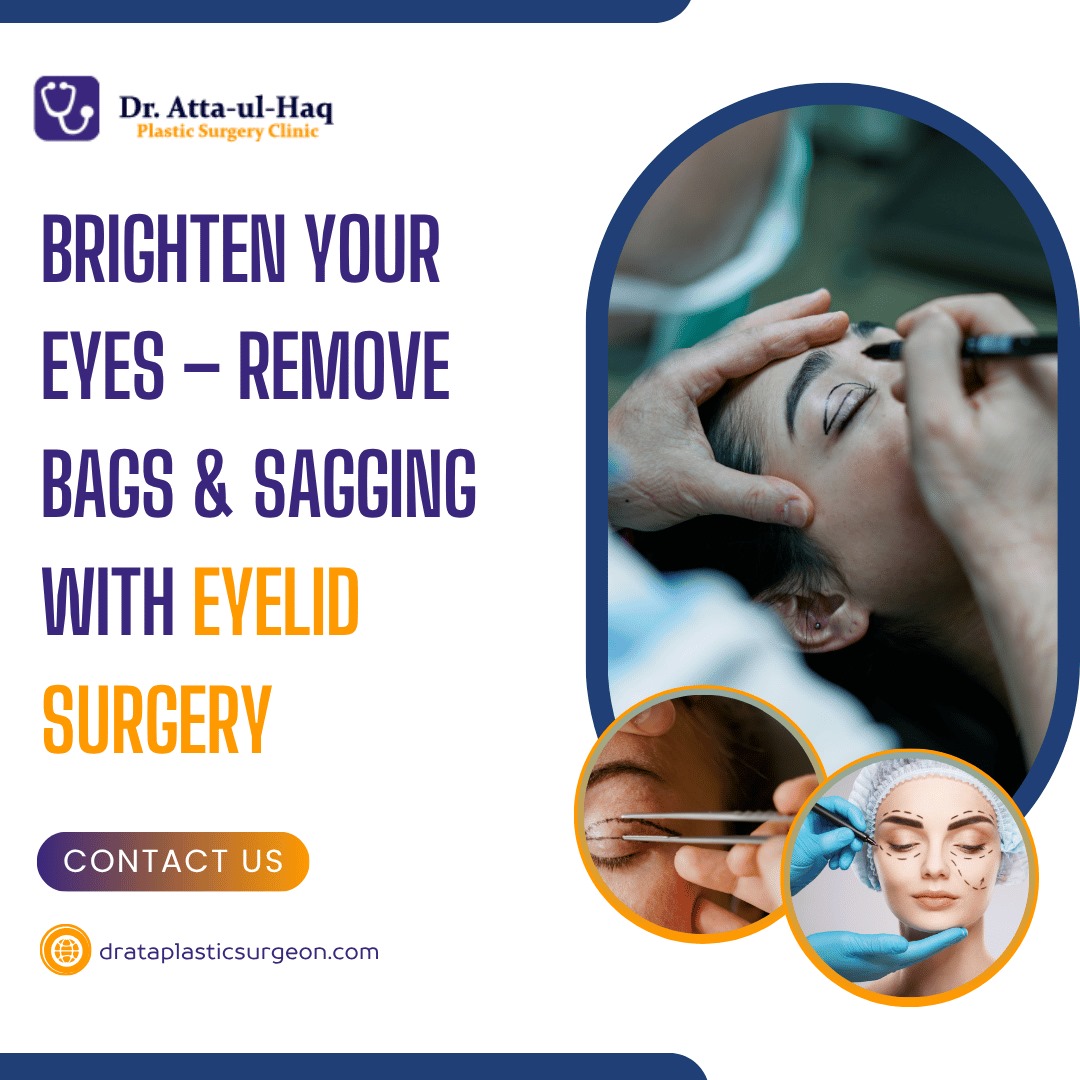
The appropriate type of blepharoplasty depends on which part of the eyelid is affected and what is causing the concern.
Upper eyelid surgery may be considered when excess skin creates a heavy or hooded appearance. Depending on the individual, the procedure may involve removing carefully planned amounts of excess skin and addressing selected underlying tissues.
In some patients, excess upper eyelid skin may also interfere with the field of vision. When this is suspected, an appropriate eye examination and assessment of visual function may be necessary to determine whether treatment is cosmetic, functional or both.
Lower eyelid surgery is often considered for prominent under-eye bags, puffiness or selected changes in the contour beneath the eyes.
Depending on the patient’s anatomy, the surgeon may remove or reposition fat and address excess skin when appropriate. The technique is selected carefully because the lower eyelid is delicate and its position is important for eye protection and comfort.
Some patients have concerns involving both the upper and lower eyelids. In selected cases, both areas may be treated during the same surgical plan. Whether this is appropriate depends on the patient’s health, anatomy, goals and the risks associated with combining procedures.
Blepharoplasty may help address selected eyelid concerns, including:
Not every concern around the eyes is treated with blepharoplasty. Dark circles, fine lines, brow descent and drooping of the upper eyelid itself may have different causes and may require different treatment options.
A consultation helps identify the underlying concern and determine whether eyelid surgery is likely to be beneficial.
Eyelid surgery may be suitable for adults who are concerned about excess eyelid skin or under-eye bags and have realistic expectations about the possible results.
Suitability depends on several factors, including:
Patients with dry eyes, thyroid-related eye problems, previous eye surgery or other eye conditions should disclose these during the consultation. An eye examination or specialist assessment may be recommended when appropriate.
The surgeon will assess the eyelids and surrounding structures before recommending treatment.
The surgical plan depends on whether the upper eyelids, lower eyelids or both are being treated.
The surgeon reviews the patient’s concerns, medical history, medications and previous procedures. The eyelids and surrounding facial structures are examined, and the potential benefits, limitations, risks and alternatives are discussed.
The type of anesthesia depends on the procedure, the patient’s health and the surgical setting. The appropriate plan is discussed before surgery, along with instructions about medications and preparation.
For upper eyelid surgery, incisions are generally planned along the natural eyelid crease where suitable. For lower eyelid surgery, the incision approach depends on the amount of excess skin and the position of the underlying tissues.
Selected skin or fat may be removed or repositioned according to the treatment plan. The incisions are then closed using an appropriate technique.
The exact approach varies between patients. Not every patient requires the removal of both skin and fat.
Patients receive instructions about wound care, activity restrictions, medication and follow-up. The surgeon explains what to expect during the initial healing period and when normal activities can be resumed.
Recovery varies according to the extent of surgery, the technique used and individual healing. Swelling, bruising, tightness, temporary blurred vision from ointment and discomfort may occur during the early recovery period.
Rest and follow the surgeon’s instructions. Cold compresses may be recommended when appropriate. Keep the incisions clean as directed and avoid rubbing or putting pressure on the eyes.
Swelling and bruising generally improve over time, although some symptoms may persist longer. The timing for returning to work and normal activities depends on healing and the type of work involved.
Avoid strenuous exercise and activities that may increase swelling or put the eyes at risk until your surgeon advises that they are safe.
The eyelid contours continue to settle as swelling decreases. Scars may take longer to mature and become less noticeable. Attend follow-up appointments so the surgeon can assess healing and address any concerns.
Seek urgent medical attention if you develop sudden changes in vision, severe eye pain, rapidly increasing swelling or significant bleeding after surgery.
The aim of blepharoplasty is to improve selected features of the eyelids while maintaining appropriate eyelid function and a natural appearance.
The results depend on the original anatomy, skin quality, surgical technique and healing. Early swelling can temporarily affect eyelid shape, so the initial appearance should not be considered the final result.
Eyelid surgery does not stop ageing, and changes may continue over time. Some concerns, such as dark circles, fine lines or brow descent, may remain because they are not caused by excess eyelid skin or fat alone.
A consultation should include a realistic discussion of the changes that surgery may achieve and its limitations.