Otoplasty in Lahore

Otoplasty in Lahore

Ear Reshaping Surgery by Dr. Ata-ul-Haq

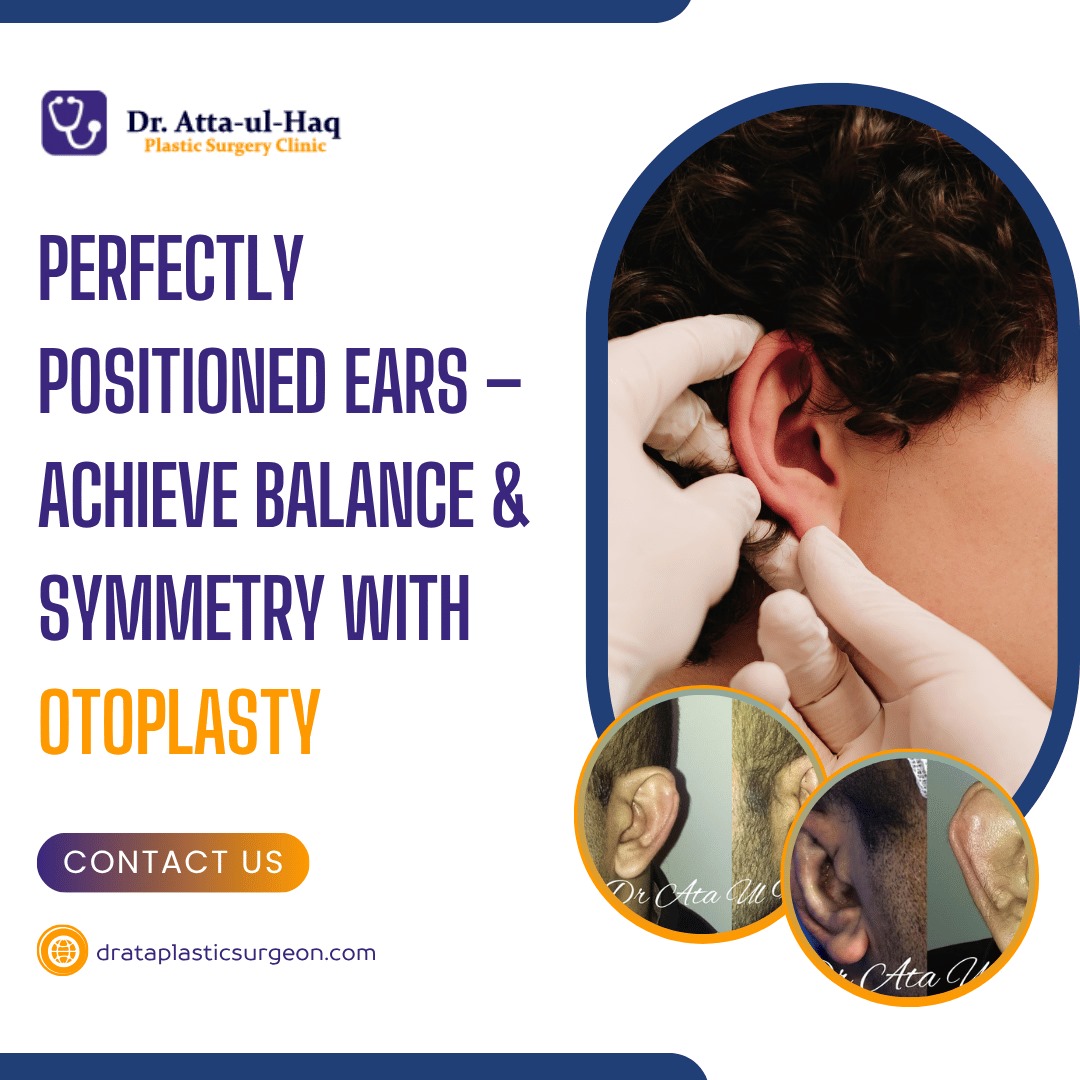
If you are concerned about ears that stick out, differences in ear shape, or the position of your ears, otoplasty may be an option to consider. Also known as ear reshaping surgery or ear pinning surgery, otoplasty is a procedure that changes the shape, position or proportions of the outer ears. Otoplasty is a surgical procedure used to change the shape or position of the outer ear. It is commonly considered that people with ears protrude noticeably from the sides of the head, or who would like to improve the balance and symmetry of their ears.
Depending on the individual’s anatomy and concerns, ear reshaping surgery may involve adjusting the cartilage, changing the angle of the ears, or refining their shape. The surgical approach depends on the patient’s needs and the features of the ears. Dr. Ata-ul-Haq is a plastic surgeon and Associate Professor of Plastic Surgery at Jinnah Hospital and Allama Iqbal Medical College, Lahore. Patients considering ear surgery can arrange a consultation to discuss their concerns, suitable treatment options, expected outcomes and recovery.

Book an appointment for Otoplasty in Islamabad with Dr. Atta

What Concerns Can Ear Reshaping Surgery Address?

People consider otoplasty for different reasons. During a consultation, the surgeon assesses the ear structure and discusses what surgery may realistically achieve.

Protruding Ears

Ears that project farther from the head than desired are a common reason for considering otoplasty. Surgery may reposition the ears closer to the head, depending on their anatomy.

Ear Shape and Cartilage

Some patients have loose skin concentrated below the belly button. Depending on the extent of the concern, a mini tummyaSome people have an ear shape or cartilage fold that differs from what they would prefer. Selected cases may benefit from reshaping the cartilage to create a more balanced appearance. tuck or another approach may be considered.

Differences Between the Ears

The two ears are rarely perfectly identical. When one ear is more prominent or positioned differently from the other, otoplasty may help improve symmetry. Complete symmetry cannot be guaranteed.

Ear Appearance in Adults and Children

Both adults and children may consider ear reshaping surgery. For children, the timing of surgery depends on ear development, overall health and emotional readiness, as well as the advice of the treating surgeon.

Who May Be Suitable for Otoplasty?

Otoplasty may be appropriate for people who are concerned about the shape or position of their ears and have realistic expectations about the procedure. Suitability depends on factors such as:
For children, the surgeon also considers developmental readiness and the child’s own feelings about the procedure. Parents or guardians should be involved in decisions about surgery for minors. A consultation is necessary to determine whether ear reshaping surgery is appropriate for an individual patient.

How Is Otoplasty Performed?

The procedure is planned according to the patient’s ear anatomy and the changes being considered.

1.Consultation and Assessment

The surgeon examines the ears, discusses the patient’s concerns and reviews medical history. The treatment plan, expected results, potential risks and recovery requirements are explained before a decision is made.

2. Anesthesia and Surgical Planning

The type of anesthesia depends on the patient’s age, health, the planned procedure and the surgical setting. The appropriate option is discussed before surgery.

3. Ear Reshaping

Otoplasty may involve reshaping or repositioning the ear cartilage. Incisions are often placed behind the ear or in natural creases where appropriate. The technique depends on the ear’s structure and the correction required.

4. Dressing and Aftercare

After surgery, a dressing or headband may be used to protect the ears and support healing. The surgeon provides instructions on wound care, sleeping position, activity restrictions and follow-up appointments. The exact surgical technique, duration and anesthesia plan vary between patients.

Otoplasty Recovery and Aftercare

Recovery after ear reshaping surgery varies depending on the extent of the procedure and individual healing.

What to Expect After Surgery

Some swelling, bruising, tenderness and discomfort may occur during the early recovery period. These symptoms usually improve gradually, although the time required differs from person to person. Patients may need to wear a protective dressing initially and, when advised, a headband during recovery. Follow the surgeon’s instructions about when to remove dressings, wash the hair and resume normal activities.

Returning to Work, School and Exercise

Return to work or school depends on healing, comfort and the type of activity involved. Strenuous exercise, contact sports and activities that could bend or injure the ears should be avoided until the surgeon confirms they can be resumed. Attend follow-up appointments so that healing can be assessed and any concerns addressed.

Before/After

Otoplasty Before and After

FAQs

Frequently Asked Questions About Otoplasty

Otoplasty is the medical term for surgery that changes the shape or position of the outer ears. Ear reshaping surgery and ear pinning surgery are common terms used to describe certain types of otoplasty.
Otoplasty can be used to reposition prominent ears closer to the head. The degree of correction depends on the ear's structure and the surgical technique selected.
Yes. Adults may be suitable for otoplasty if they are in appropriate health and have realistic expectations. A consultation is needed to assess individual suitability.
Children may be considered once the ears have developed sufficiently, often around five to six years of age. The appropriate timing depends on the child's development, health and readiness for surgery. The surgeon should assess each child individually.
Recovery varies. Swelling and tenderness are generally more noticeable during the early healing period and improve over time. The timing for returning to work, school, exercise and contact sports depends on the patient's progress and the surgeon's advice.
Otoplasty involves incisions, so scars can occur. Incisions are often placed behind the ears or in natural creases when suitable, which may make scars less noticeable. Scar appearance varies between individuals.
No surgery is risk-free. Possible complications include infection, bleeding, scarring, asymmetry, changes in sensation and the need for further surgery. Discuss the potential risks and benefits with your surgeon before proceeding.
The cost depends on the complexity of the procedure, whether one or both ears require correction, and the anesthesia and facility arrangements. The clinic can provide an estimate after assessing your needs.
Contact the clinic by calling or WhatsApp at +92 321-5847076, or use the online appointment page, to arrange a consultation in Lahore.

Otoplasty Results: What Should You Expect?

The aim of otoplasty is to improve the position or shape of the ears in a way that suits the patient’s anatomy. For people with prominent ears, this may involve bringing the ears closer to the head. Swelling can affect the appearance of the ears during early recovery, so the initial result may not represent the final outcome. Scars may occur, although incisions are often placed behind the ears where they may be less noticeable.
Results vary according to the original ear structure, surgical technique and healing. Perfect symmetry or a specific appearance cannot be guaranteed.

Risks and Possible Complications of Ear Surgery

Like other surgical procedures, otoplasty carries risks. These may include:
The likelihood of complications varies between patients. Discuss your medical history, concerns and individual risk factors with the surgeon before deciding on treatment. Seek medical advice promptly if you experience worsening pain, increasing redness, fever, unusual discharge or other concerning symptoms after surgery.

Otoplasty Cost in Lahore

The cost of otoplasty in Lahore depends on several factors, including:
An accurate estimate can be provided after an assessment of the patient’s needs and the proposed treatment plan. During your consultation, ask what is included in the quoted cost and whether additional appointments or services may incur separate charges. Contact the clinic to arrange a consultation with Dr. Ata-ul-Haq and discuss the expected cost of ear reshaping surgery.

Otoplasty Before and After

Before-and-after photographs may help patients understand the types of changes that can be possible with ear reshaping surgery. However, results differ according to individual anatomy, the procedure performed and the healing process.
Review genuine patient photographs during your consultation, where available, and discuss what is realistic for your own ears. Photographs should not be taken as a guarantee of a particular result.

Explore Related Plastic Surgery Procedures

These links help patients explore other services without distracting from the primary tummy tuck topic.

Liposuction Surgery

Liposuction may be considered for localized fat deposits when skin quality and other factors make it appropriate. Unlike a tummy tuck, it does not remove significant excess skin.
Learn about Liposuction Surgery in Lahore

Double Chin Surgery

Double chin treatment may involve chin liposuction for selected patients with localized fat beneath the chin. Suitability depends on anatomy, skin quality and the cause of the concern.
Learn About Double Chin Removal in Lahore

Gynecomastia Surgery

Gynecomastia surgery addresses enlarged male breast tissue. Treatment may involve liposuction, removal of glandular tissue or a combination, depending on the cause of enlargement.
Learn about Gynecomastia Surgery in Lahore

Considering Otoplasty in Lahore?

If you are considering ear reshaping surgery, a consultation can help you understand the available options, likely benefits, limitations, risks and recovery requirements. Contact Dr. Ata-ul-Haq to discuss your concerns and determine whether otoplasty may be suitable for you.

Otoplasty Procedure

Book your free online Otoplasty consultation with Dr. Atta-ul-Haq

Dr. Ata-ul-Haq is a plastic surgeon and Associate Professor of Plastic Surgery at Jinnah Hospital and Allama Iqbal Medical College, Lahore. He has more than 15 years of experience in plastic and reconstructive surgery and is a life member of the Pakistan Association of Plastic Surgeons.
Patients considering otoplasty can discuss their ear concerns, medical suitability, surgical options and recovery expectations during a consultation. The recommended approach is based on individual assessment rather than a one-size-fits-all treatment plan.
Plastic Surgeon in Lahore - Dr Ata-ul-Haq